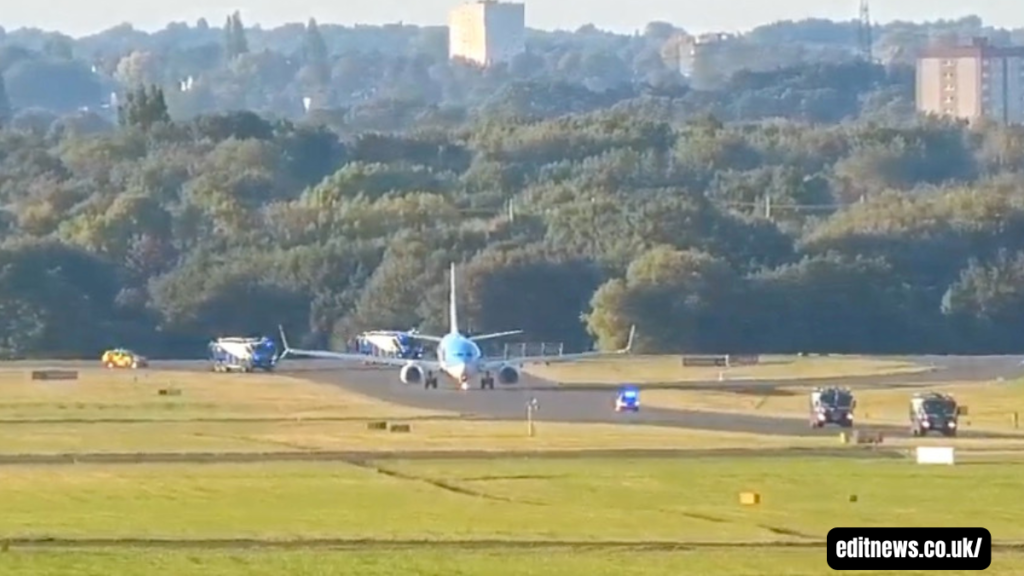

A holiday flight can feel routine until one unexpected moment changes the entire journey. The Tui Flight BY6754 Emergency Landing became a widely discussed aviation incident because it involved a reported bird strike, a sudden diversion, emergency vehicles, and concerned passengers who were expecting a normal trip from the United Kingdom to Cyprus.
The flight, also reported as TOM 6754, departed Cardiff Airport for Paphos, Cyprus, on September 28, 2025. Shortly after takeoff, the aircraft was diverted to Birmingham Airport, where it landed safely and passengers disembarked. TUI later said there was no engine failure and described the diversion as a precaution after a bird strike.
Tui Flight BY6754 Emergency Landing Overview
The Tui Flight BY6754 Emergency Landing attracted attention because it combined two topics that travelers care about most: aircraft safety and emergency response. According to reports, the aircraft experienced a bird strike shortly after departure, leading pilots to divert instead of continuing the journey to Cyprus.
For passengers, the incident was unsettling because unexpected sounds, vibration, or unusual smells can make any flight feel frightening. However, the most important point is that the aircraft landed safely, passengers and crew were safely disembarked, and the diversion followed aviation safety procedures.
What Happened During the Flight
TUI Airways flight TOM 6754 was scheduled to fly from Cardiff Airport to Paphos. Reports said the issue happened soon after takeoff, around the early stage of the flight, when the aircraft was still climbing away from Cardiff. The aircraft then circled before heading toward Birmingham Airport for a safe landing.
Some passengers reportedly experienced worry because they knew something unusual had happened but did not immediately understand the full situation. That uncertainty is often what makes emergency diversions feel more dramatic for travelers, even when pilots remain in control and are following established procedures.
Why the Plane Diverted to Birmingham Airport
A diversion does not always mean an aircraft is in extreme danger. In many cases, pilots choose the safest nearby airport where emergency teams, runway capacity, and operational support are available. Birmingham Airport was selected as the diversion point, and emergency services met the aircraft after arrival as part of normal safety procedures.
Birmingham Airport temporarily suspended operations to accept the inbound TUI diversion. This kind of temporary pause can happen when an aircraft declares an emergency or requires priority handling, because air traffic control and airport teams must keep the runway environment clear and ready.
Bird Strike Explained in Simple Words
A bird strike happens when a bird collides with an aircraft. These incidents are most common during takeoff, climb, approach, or landing because aircraft are closer to the ground, where birds are more likely to be present. The FAA says most bird strikes with fixed-wing civil aircraft happen during landing phases or during takeoff and climb.
Most bird strikes do not lead to major accidents, but airlines still treat them seriously. A strike can require pilots to check aircraft performance, monitor engine behavior, review warning systems, and decide whether continuing the flight is safe. In this case, TUI described the diversion as a precautionary routine procedure after a bird strike.
Passenger Reactions and Public Interest
The story spread quickly because flight emergency reports naturally attract attention online. Travelers search for details because they want to know what happened, whether passengers were injured, whether the aircraft had engine trouble, and why the plane landed somewhere other than its planned destination.
For American readers, the incident is also interesting because bird strikes are not limited to Europe. They are a global aviation concern. The FAA’s wildlife strike information shows that bird strikes are a regular safety-management issue, especially near airports and during lower-altitude flight phases.
Airline and Airport Safety Response
The response to the Tui Flight BY6754 Emergency Landing shows how aviation systems are designed around prevention and caution. Pilots do not need to wait for a situation to become critical before diverting. If there is any doubt about aircraft condition after a bird strike, landing at a suitable airport is often the safer decision.
Airport emergency vehicles meeting an aircraft can look alarming, but it is a standard protective measure. Fire and rescue teams are placed nearby so they can respond quickly if needed. In this case, reports said the aircraft landed safely and taxied after arrival, with passengers disembarking afterward.
Why Emergency Landings Are Often Precautionary
The phrase “emergency landing” sounds frightening, but many aviation emergencies are controlled and precautionary. Pilots train for abnormal situations, airlines use checklists, and airports prepare emergency response teams before the aircraft touches down. These systems are designed to reduce risk before it becomes serious.
That is why the TUI diversion should be understood as a safety process in action. The flight did not continue to Cyprus because the crew prioritized a safe landing and aircraft inspection. For passengers, delays are frustrating, but safety decisions always come before schedules.
What Travelers Can Learn From This Incident
Passengers should remember that unusual flight changes do not always mean disaster. A diversion may happen because pilots are being careful. When crew members ask passengers to remain seated, keep belts fastened, or wait for instructions, those directions help the cabin stay safe and organized.
Travelers should also avoid spreading unverified claims during an incident. Early reports can be confusing, especially when passengers hear partial announcements or see emergency vehicles. The most reliable information usually comes from the airline, airport, aviation authorities, or established news outlets.
Conclusion
The Tui Flight BY6754 Emergency Landing was a serious but safely handled aviation incident. A TUI Airways flight from Cardiff to Paphos diverted to Birmingham Airport after a reported bird strike shortly after takeoff. Passengers were safely disembarked, and TUI later clarified that the diversion was precautionary and that there was no engine failure.
For travelers, the key lesson is that emergency diversions are part of modern aviation safety. Bird strikes can be alarming, but trained pilots, airport emergency teams, and airline procedures are designed to manage these situations carefully. The safe outcome shows why precaution is one of aviation’s most important principles.
FAQs
What happened during the Tui Flight BY6754 Emergency Landing?
The flight was traveling from Cardiff Airport to Paphos, Cyprus, when it diverted after a reported bird strike shortly after takeoff.
The aircraft landed safely at Birmingham Airport, where emergency services met it as part of normal response procedures.
Was anyone injured during the TUI emergency landing?
Reports said passengers and crew safely disembarked after the aircraft landed at Birmingham Airport.
The incident caused concern and disruption, but the safe landing was the most important outcome.
Why did TUI Flight BY6754 land at Birmingham Airport?
Birmingham Airport was used as a suitable diversion airport after the reported bird strike.
Airports may be chosen for diversions based on runway availability, emergency services, location, weather, and operational support.
Did the TUI aircraft suffer engine failure?
TUI later said there was no engine failure and described the diversion as a precaution after a bird strike.
Some early passenger accounts and reports mentioned engine concerns, which is why clear airline confirmation matters.
Are bird strikes dangerous for airplanes?
Bird strikes can be serious, especially if they affect an engine, windshield, sensors, or aircraft structure.