
Introduction
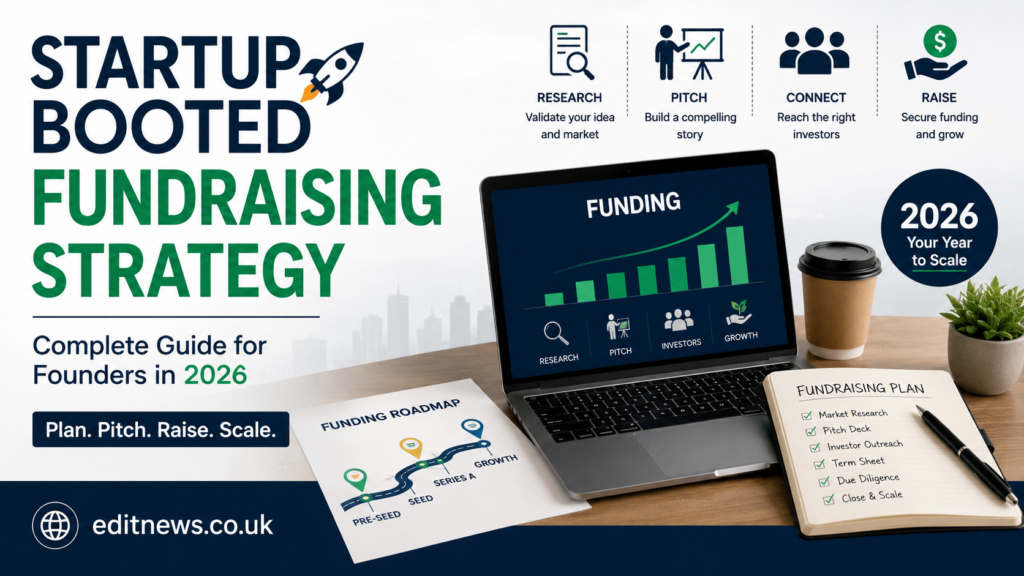
Building a startup today is very different from what it was a decade ago. Capital is no longer flowing as freely, investors are more cautious, and founders are expected to prove real traction before they even get a meeting. In this environment, the startup booted fundraising strategy has become one of the most practical and sustainable ways to build and scale a company.
At its core, this approach blends bootstrapping discipline with strategic fundraising. Instead of relying entirely on external funding, founders prioritize revenue generation, lean operations, and controlled scaling. Funding is treated as a tool for acceleration, not survival. This shift has reshaped how modern startups are built in 2026.
This guide explores how the startup booted fundraising strategy works, why it matters, and how founders can apply it step by step to build stronger, more resilient businesses while maintaining control and minimizing risk.
Understanding Startup Booted Fundraising Strategy
What the Concept Really Means
The startup booted fundraising strategy refers to a hybrid approach where founders primarily rely on internal resources, early revenue, and efficient operations while selectively raising external capital only when necessary. It sits between pure bootstrapping and aggressive venture-backed scaling.
Unlike traditional fundraising models that focus on raising large amounts of capital early, this approach encourages startups to prove their business model first. Revenue becomes the validation signal, not just the pitch deck.
In simple terms, it is about building a business that can survive and grow on its own before inviting investors to accelerate expansion.
Evolution of Funding Models
Startup funding has shifted significantly over the years. In the early 2010s, venture capital was often the default starting point. Founders raised large seed rounds based on ideas and projections rather than real traction.
However, market conditions have changed. Investors now prioritize profitability, unit economics, and clear customer demand. This has led to the rise of lean startups, revenue-based financing, and hybrid funding strategies like the startup booted fundraising strategy.
Today, startups are expected to show real numbers before receiving serious funding. This evolution has made disciplined financial planning a core startup skill.
Core Principles Behind the Strategy
This strategy is built on a few foundational principles that guide decision-making:
- Revenue-first thinking instead of dependency on funding
- Lean operations that prioritize efficiency over scale
- Controlled growth aligned with actual demand
- Equity protection for founders over unnecessary dilution
Together, these principles help startups build long-term stability instead of chasing short-term hype.
Why Startup Booted Fundraising Strategy Matters in 2026
Changing Investor Expectations
Investors in 2026 are far more data-driven than ever before. They want startups that already demonstrate traction, not just potential. This means founders must show real customers, recurring revenue, and sustainable growth patterns.
The startup booted fundraising strategy aligns perfectly with this shift. By focusing on revenue before fundraising, startups naturally become more attractive to investors who are now looking for lower-risk opportunities.
Market Conditions Driving Change
Global economic conditions have also influenced startup behavior. Higher interest rates, tighter capital markets, and increased competition have made fundraising more difficult.
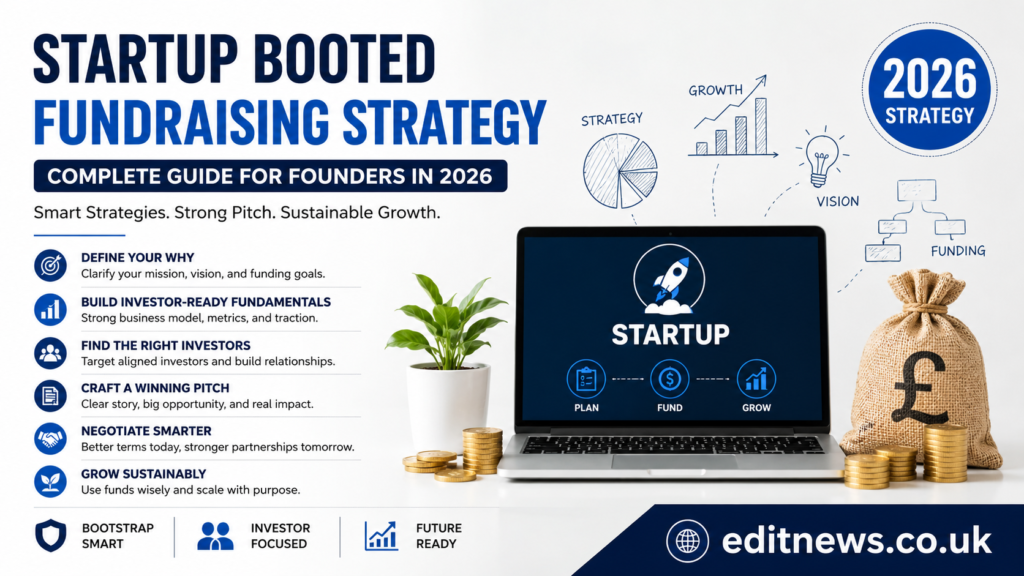
As a result, startups cannot afford to rely solely on external capital. They must optimize every dollar and ensure that growth is justified by real demand. The booted fundraising model helps startups survive in uncertain environments by reducing dependency on outside funding.
Benefits for Founders
For founders, this strategy offers several long-term advantages. The most important is control. By not raising excessive capital early, founders retain decision-making power and avoid pressure from investors to scale prematurely.
It also improves sustainability. Businesses built on real revenue tend to be more stable and less vulnerable to market fluctuations. Additionally, founders avoid unnecessary equity dilution, allowing them to maintain ownership of their vision.
Core Components of a Successful Startup Booted Fundraising Strategy
Revenue-First Growth Model
A revenue-first model ensures that the business is validated by actual customers before scaling. Instead of focusing on funding rounds, founders focus on solving a problem people are willing to pay for.
Early monetization strategies may include subscriptions, pre-orders, pilot programs, or freemium models. The goal is not just to attract users but to convert them into paying customers as early as possible.
Lean Operational Structure
Lean operations are essential to maintaining financial health. This means keeping costs low, avoiding unnecessary hires, and using tools that maximize productivity.
Startups often rely on automation, outsourcing, and no-code solutions to stay efficient. The idea is simple: every dollar saved extends runway and increases flexibility.
Smart Capital Utilization
Even when startups raise money, the goal is to use it strategically. Capital should be deployed only when it directly contributes to growth or improves efficiency.
This includes marketing experiments, product development, or expansion into proven markets. Wasteful spending is avoided, and every investment must have a measurable return.
Strategic Fundraising Timing
Timing is everything in this strategy. Instead of raising funds early, startups wait until they have strong traction and leverage.
This allows founders to negotiate better valuations and terms. Investors are more likely to invest when they see a growing, revenue-generating business rather than an unproven idea.
Step-by-Step Execution of the Strategy
Building a Minimum Viable Product
The first step is creating a minimum viable product that solves a real problem. It does not need to be perfect, but it must be functional enough to test market demand.
Early feedback is critical. Founders should focus on learning what users actually want rather than assuming what they need.
Generating Early Revenue
Once the MVP is ready, the focus shifts to monetization. Early revenue can come from pilot customers, subscriptions, or direct sales.
This stage is important because it validates the business model and builds investor confidence later.
Optimizing Burn Rate
Controlling expenses is essential for survival. Startups must track every cost and eliminate anything that does not contribute directly to growth.
A lower burn rate increases runway and gives founders more time to experiment and refine their product.
Building Investor Readiness
Before approaching investors, startups must prepare strong metrics. This includes revenue growth, customer acquisition cost, retention rates, and market size.
A clear and compelling growth story backed by data significantly increases fundraising success.
Raising Capital Strategically
When fundraising begins, it should be targeted and intentional. Founders should approach investors who understand their industry and growth model.
Negotiation power comes from traction. The stronger the numbers, the better the terms.
Scaling Sustainably
After funding, scaling should remain disciplined. Growth must align with operational capacity and market demand.
Rapid expansion without structure can lead to inefficiency and financial instability.
Common Mistakes Founders Should Avoid
One of the most common mistakes is relying too heavily on external funding too early. This can create dependency and reduce strategic flexibility.
Another issue is premature scaling. Many startups expand before achieving product-market fit, leading to wasted resources and failure.
Poor financial discipline is also a major risk. Without proper budgeting and tracking, even well-funded startups can run out of cash quickly.
Lastly, weak value propositions make it difficult to attract both customers and investors. Clear positioning is essential for success.
Tools and Resources That Support the Strategy
Modern startups have access to powerful tools that make execution easier. Financial tracking tools help manage budgets and forecast cash flow accurately.
Analytics platforms provide insights into user behavior and product performance, allowing data-driven decisions.
Fundraising platforms also connect founders with investors more efficiently, reducing the time needed to secure capital.
Future of Startup Booted Fundraising Strategy
The future of startups is likely to be more founder-controlled and efficiency-driven. Investors are increasingly rewarding disciplined, revenue-focused companies.
Alternative financing models such as revenue-based financing are also gaining popularity. These allow startups to grow without giving away large amounts of equity.
Artificial intelligence and automation will further reduce operational costs, making lean startups even more powerful in the coming years.
Conclusion
The startup booted fundraising strategy represents a major shift in how modern companies are built. Instead of chasing funding first, founders are now focusing on building real value, generating revenue, and scaling responsibly.
In 2026, success is no longer about raising the most money. It is about using capital wisely, maintaining control, and building a business that can stand on its own.
Founders who embrace this approach are better positioned to create sustainable, profitable, and resilient startups in an increasingly competitive landscape.
FAQs
What is a startup booted fundraising strategy?
It is a hybrid funding approach where startups rely on early revenue and lean operations while raising external capital only when necessary to accelerate growth.
Is this strategy better than traditional fundraising?
It depends on the business model, but it often provides more control, less dilution, and stronger long-term stability compared to traditional heavy fundraising.
When should a startup start fundraising?
Fundraising should begin once the startup has clear traction, consistent revenue, and validated product-market fit.
Can startups grow without external funding?
Yes, many startups successfully grow using revenue reinvestment, especially in SaaS, digital services, and e-commerce models.
What are the main risks of this strategy?
The biggest risks include slower initial growth, limited resources, and potential scaling delays if revenue generation is not strong enough.