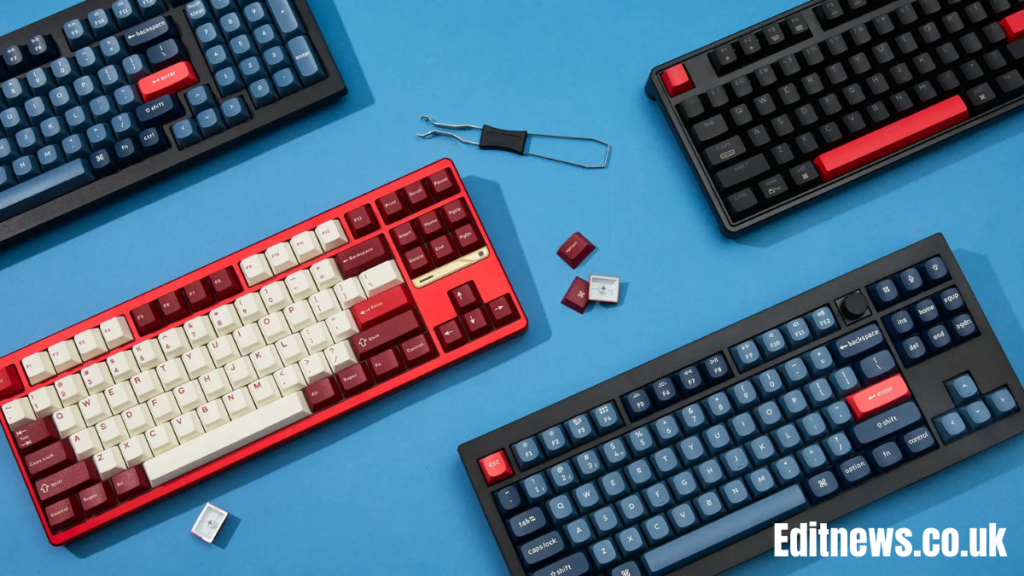

The term Kibard has become increasingly common in online searches, leaving many people confused about what it actually means. At first glance, it looks like a technical word, a brand name, or even a new digital concept. However, in most cases, it is simply a typing mistake that has gained attention because of how frequently it appears in search engines.
In today’s digital world, small typing errors can easily turn into trending search queries. Kibard is one of those examples where a simple misspelling of “keyboard” has created its own identity online. This article explains why this happens, what Kibard really means, and how search engines interpret such terms in real time.
What Does Kibard Mean?
Kibard does not have any official meaning in English or any recognized dictionary. It is not a technical term, a product, or a concept with a defined purpose. Instead, it is widely accepted as a misspelling of the word “keyboard,” created when users type quickly or incorrectly.
Most instances of Kibard appear due to fast typing habits or mobile keyboard autocorrect limitations. When users type “keyboard” too quickly, the missing or swapped letters can easily form “kibard,” especially on touchscreens where precision is lower. Over time, this repeated mistake has become noticeable in search trends.
Kibard vs Keyboard – Understanding the Difference
The difference between Kibard and Keyboard is simple but important. “Keyboard” is the correct English word used to describe a typing device or digital input tool. It is widely used in computing, gaming, and everyday communication.
On the other hand, “Kibard” is not a valid word and has no defined meaning. It is only a result of typing errors, often caused by fast finger movement or incorrect key placement. The similarity in structure is what confuses users and leads to repeated searches.
Even though they look similar, only “keyboard” has real-world significance, while “kibard” exists purely as a digital typo.
Why Do People Type Kibard Instead of Keyboard?
One of the main reasons people type Kibard instead of Keyboard is fast typing habits. When users are in a hurry, they often skip letters or press nearby keys, especially on mobile devices. This leads to unintentional spelling mistakes that still feel correct to the user.
Another major reason is autocorrect behavior. Sometimes keyboards on phones do not correct “kibard” properly, especially if the system has learned the typo from repeated usage. Over time, this reinforces the incorrect spelling, making it more common in search queries.
Muscle memory also plays a role. When typing quickly without looking at the screen, fingers can easily drift to nearby keys, resulting in variations like Kibard instead of Keyboard.
Is Kibard a Real Word or a Digital Trend?
Kibard is not a real word in any formal language system. It does not appear in dictionaries and has no linguistic or technical definition. However, it has become a minor digital trend because of how frequently people mistype it.
Search engines often detect these patterns and treat them as meaningful signals. When thousands of users search for the same typo, it creates a visible trend in keyword data. This is how Kibard has gained attention in SEO discussions and online content analysis.
In reality, it remains a typing error, but one that reflects how user behavior shapes search engine data.
How Search Engines Interpret Kibard
Modern search engines are designed to understand user intent, even when spelling mistakes occur. When someone types Kibard into Google, the system automatically suggests “keyboard” as the intended term. This is part of its built-in correction and prediction system.
Search engines rely on semantic analysis, which means they interpret meaning rather than just exact spelling. If enough users search for Kibard, Google learns that it is closely related to keyboard and adjusts results accordingly.
This is why even incorrect terms can still lead users to correct information. The system prioritizes intent over accuracy, ensuring a smooth search experience.
Kibard in Online Searches and Digital Culture
Kibard has quietly become part of online search culture, mainly because of curiosity. Many users search it after noticing it in suggestions or seeing it mentioned in tech-related content. This curiosity drives more traffic, which further strengthens its visibility.
In digital analytics, typos like Kibard are important because they reveal how people actually type in real life. Marketers and SEO professionals study these patterns to understand user behavior and optimize content.
Even though it is not meaningful on its own, Kibard reflects how language evolves in the digital space through user interaction and repeated mistakes.
Common Variations and Related Search Terms
Kibard is not the only variation of “keyboard” that appears in search data. Other common misspellings include “keybord,” “keyboad,” and “kiboard.” These variations usually come from similar typing errors or missing letters.
All of these terms are connected by the same user intent, which is to find information about a keyboard. Search engines group them together to provide accurate results despite spelling differences.
Understanding these variations helps explain how flexible modern search algorithms have become when dealing with human error.
How to Avoid Typing Kibard Instead of Keyboard
Avoiding mistakes like Kibard starts with improving typing accuracy. One simple method is slowing down slightly when typing, especially on mobile devices. This gives the brain more time to process each letter correctly.
Another helpful approach is enabling autocorrect and predictive text features. These tools are designed to catch common spelling errors and automatically replace them with the correct word “keyboard.”
Practicing regular typing exercises can also improve muscle memory, reducing the chances of repeated mistakes over time. Small adjustments in typing habits can make a big difference in accuracy.
SEO Value of the Keyword Kibard
From an SEO perspective, Kibard is an interesting example of a typo keyword that still generates search traffic. While it has no real meaning, people continue to search for it, creating opportunities for informational content.
Websites often target such keywords to capture accidental traffic and redirect users to the correct term. Since search engines already associate Kibard with keyboard, well-optimized content can rank easily for this query.
However, the focus should always remain on providing value and clarity rather than overusing the keyword. Balanced optimization helps improve user experience and search visibility at the same time.
Conclusion
Kibard is not a real word, but rather a common typing error for “keyboard” that has gained attention through repeated online searches. It highlights how small mistakes in typing can influence search trends and digital behavior.
While it may look like a new or trending term, its meaning is simple and rooted in human error. Understanding Kibard helps users better navigate search engines and avoid confusion in the future.
Frequently Asked Questions
What does Kibard mean?
Kibard is not an official word. It is simply a misspelling of “keyboard” that occurs due to typing errors.
Is Kibard a real word?
No, Kibard is not a recognized English word. It has no dictionary definition or technical meaning.
Why do people search for Kibard?
People search for Kibard because they accidentally type it instead of keyboard or see it in search suggestions.
Does Kibard have any technical meaning?
No, Kibard has no technical or digital meaning. It is only a typing mistake.
Why does Google show Kibard results?
Google shows Kibard results because it understands user intent and automatically links it to “keyboard.”
Can Kibard be used for SEO?
Yes, Kibard can be used as a typo-based SEO keyword, but it should be supported with correct context and helpful content.